

Apple's New iPad Mini Is a Real Upgrade, but the Screen Is Still 60Hz
Apple's new iPad mini gets OLED, A20 Pro and IP67 in a thinner body. But it starts at $699, and the screen is still 60Hz. Here is who should upgrade.

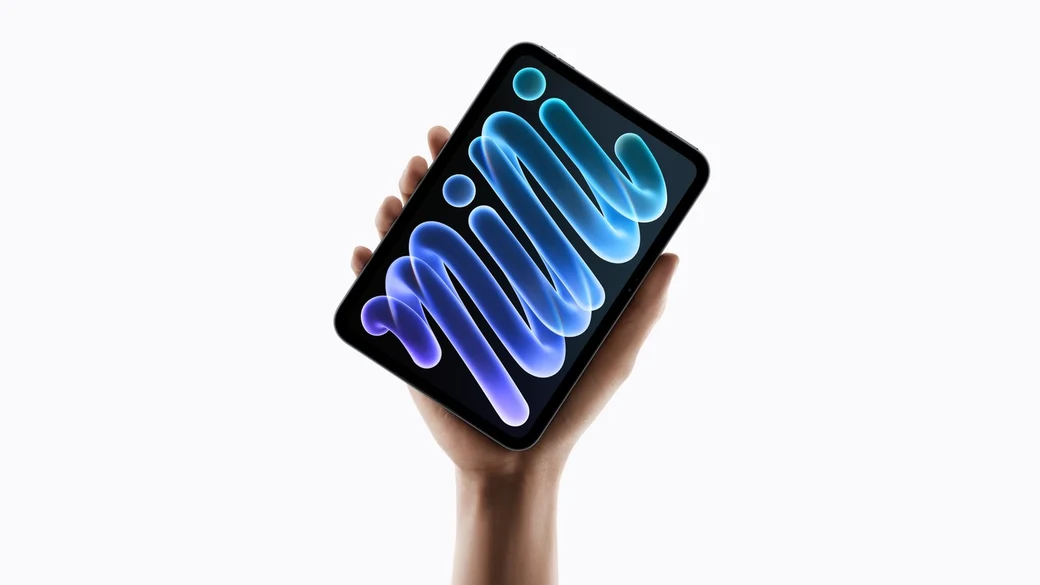
Apple just gave the iPad mini its biggest update ever, and for once that phrase is not just marketing. The new iPad mini gets an OLED display, the brand new A20 Pro chip, a thinner and lighter body, and water and dust resistance for the first time.
It also gets a higher price, and it keeps one compromise that is hard to ignore: the new OLED screen still runs at 60Hz. So this is not all good news. It is a much better small iPad, and a noticeably more expensive one, but it is not the complete upgrade the spec sheet makes it sound like.
Preorders start Wednesday, October 28, with availability beginning Friday, November 6.
What is new
1. An OLED display, finally
The headline change is the screen. The new iPad mini has an 8.5 inch Super Retina XDR OLED display, up from 8.3 inches in the previous model, in roughly the same footprint thanks to bezels that Apple says are 24 percent thinner.
OLED means pixel level lighting control, deeper blacks, and support for the P3 wide color gamut. Peak brightness is up to 1,200 nits, more than twice the previous generation, with 600 nits of full screen brightness for SDR and HDR content and a 2,000,000:1 contrast ratio. Minimum brightness drops to 1 nit, which should help for reading in bed or working in a dark room.
There is also a new nano-texture display option, borrowed from iPad Pro, which reduces glare in bright environments. It costs an extra $100 and is only available on the 256GB and 512GB models.
The big letdown is that this is still a 60Hz display. There is no ProMotion, so scrolling, swiping, and Apple Pencil strokes will not look as smooth as they do on an iPad Pro, which refreshes at up to 120Hz, or on any recent iPhone Pro. OLED makes the screen look far better when it is still. It does nothing for how it feels in motion.
At $699 and up, a 60Hz panel is the clearest sign that Apple is still saving its best display tech for the iPad Pro. If you are coming from a 120Hz iPhone, you will notice the difference the moment you start scrolling.
2. A20 Pro, the same chip as the new iPhones
The new iPad mini runs on A20 Pro, the chip that debuted with last month's iPhone 18 Pro and is also inside the iPhone Duo, which reached stores last week. Apple built it on a 2 nanometer process, with a 7-core GPU that has Neural Accelerators in each core.
Apple's claimed gains over the previous iPad mini are large:
- Up to 4.5x faster AI performance
- Up to 2.7x faster graphics performance, with hardware accelerated ray tracing and mesh shading
- Up to 60 percent faster multithreaded CPU performance
- More than 2x higher unified memory bandwidth
Those are Apple's numbers, tested by Apple on the top 6-core CPU version, so treat them as best case rather than a promise for every app or every model. Still, the jump in context matters. The previous iPad mini launched in October 2024 with the A17 Pro, a chip from the 2023 iPhone 15 Pro. This new model skips straight to Apple's newest Pro chip, which should keep it feeling fast for years.
One buying detail worth knowing: the fullest version of A20 Pro, with a 6-core CPU and a Dual 16-core Neural Engine, is only in the 512GB model. The 128GB and 256GB models get a 5-core CPU and a single 16-core Neural Engine. If you want the absolute top spec, that is another reason to look at 512GB, not just for storage.
3. Thinner, lighter, and water resistant
The new iPad mini is 5.4 mm thin, down from 6.3 mm, and the Wi-Fi model weighs 255 grams, down from 293 grams. It comes in two finishes: midnight and starlight.
It also gets an IP67 rating for water and dust resistance, tested to a maximum depth of 1 meter for up to 30 minutes under lab conditions. Apple notes that resistance can decrease with normal wear and that liquid damage is not covered under warranty, so do not treat this as a pool toy. But for a tablet that gets used outside, in kitchens, on job sites, and by kids, this is a meaningful durability upgrade, and it is the best water resistance rating any iPad has had.
Part of how Apple got there is a new Acoustic Display. Custom tweeters are hidden between the glass and the aluminum enclosure, and specially designed woofers are paired through the display for punchier bass and more volume. The sealed enclosure that makes that audio system work also helps achieve the IP67 rating.
4. Cameras and connectivity move to the modern standard
The 12MP Center Stage front camera moves to the landscape edge, which is where it should have been all along for video calls. All current iPads now have the camera on the long side.
The 12MP Wide back camera keeps Smart HDR 4 and 4K video at up to 60 frames per second, and adds an Adaptive True Tone flash for better photos and document scanning.
Connectivity also gets a full refresh. The new iPad mini uses Apple's N1 wireless chip for Wi-Fi 7, Bluetooth 6, and Thread, and cellular models use Apple's C2 modem, which Apple says enables up to 50 percent faster cellular data speeds than the previous generation, with better power efficiency. Cellular models use eSIM.
5. iPadOS 27 and the new Siri AI
The new iPad mini ships with iPadOS 27, which brings the next generation of Apple Intelligence. Siri AI follows in beta with iPadOS 27.2. Siri AI is pitched as more personal, capable, and conversational, with personal context, onscreen awareness, and answers across a broad range of topics.
iPadOS 27 also brings freely resizable windows, window tiling, and Exposé for multitasking, plus a Liquid Glass slider that lets you adjust the look from ultraclear to fully tinted. With iPadOS 27.2, the mini will also support extended display mode when connected to an external display.
Siri AI availability has limits worth noting. It is in beta, it only works in English, French, Japanese, Korean, Portuguese, and Spanish for now, and Apple says it is not currently available in the EU in iPadOS. Some Apple Intelligence features that rely on server models also have daily usage limits.
Price and availability
Preorders start October 28, with availability November 6, in 36 countries and regions including the US.
US pricing for Wi-Fi models:
- 128GB: $699
- 256GB: $799
- 512GB: $999
Cellular adds $150 to any model, so Wi-Fi plus Cellular starts at $849 and tops out at $1,149 for 512GB.
The nano-texture display option adds $100, but only on 256GB and 512GB models.
Accessories are sold separately. The new TechWoven Smart Folio is $79, Apple Pencil (USB-C) is $79, and Apple Pencil Pro is $129. Both pencils are supported, which is a nice contrast to the $2,000 iPhone Duo, which does not support Pencil Pro.
With education savings, the iPad mini starts at $649.
The price increase, in context
The new starting price of $699 is $200 more than the previous iPad mini's $499 launch price in 2024. It is $100 more than the $599 price that same model was selling for after Apple's price hikes earlier in 2026.
That stings, especially for a mini that still has a 60Hz screen and still uses Touch ID instead of Face ID. There is no way to buy a mini sized iPad with Face ID or ProMotion, and at $699 and up, those omissions feel harder to excuse.
But the hardware gap is also much larger than a typical yearly refresh. You are getting OLED, A20 Pro, IP67, Wi-Fi 7, a landscape camera, and a thinner and lighter body all at once. This is not a chip bump. It is a redesign.
Who should upgrade
- Owners of the 2021 or 2024 iPad mini: This is a clear upgrade in display, speed, durability, and connectivity. If you use your mini daily, the OLED screen and A20 Pro alone will be noticeable.
- People who want the smallest real iPad: At 255 grams with an 8.5 inch OLED screen, this is still the most portable full iPad experience Apple sells. For comparison, it weighs essentially the same as the iPhone Duo (254 grams), even though the Duo only has a 7.6 inch inner display when unfolded.
- Field workers, doctors, pilots, readers, and gamers: The IP67 rating, 1 nit minimum brightness, nano-texture option, and Pencil Pro support make this a serious tool, not just a media tablet.
- Anyone buying for the long term: A20 Pro should age far better than the A17 Pro in the old mini, especially for on device AI work.
Who should wait
- If you just bought the 2024 mini: The old model is still capable, and the new one is $100 to $200 more than you paid, depending on when you bought it.
- If Face ID is a dealbreaker: You will not get it here. Touch ID is still the only biometric option.
- If smooth scrolling matters to you: The mini is still 60Hz. ProMotion is only available on iPad Pro, and even iPad Air is 60Hz, so this is a lineup wide choice, not just a mini compromise.
- If you want a larger screen: You need to step up to iPad Air or iPad Pro. The mini is still a mini, just a much better one.
- If budget is tight: At $699, this is now priced close to iPad Air territory. Check what you actually need before paying for OLED and A20 Pro in a small body.
Bottom line
Apple calls this the biggest iPad mini update ever, and the spec sheet backs that up. OLED, A20 Pro, IP67, Wi-Fi 7, a landscape camera, and a thinner and lighter design in one update is a lot, especially after two years with an older chip.
The price increase is real, the 60Hz screen is a genuine miss on a $699 tablet with an OLED display, and Touch ID instead of Face ID is still annoying. But if you love the mini form factor, this is still the update you have been waiting for. It finally feels like a premium small iPad, not just a smaller version of Apple's cheaper tablets.
Preorder on October 28, in stores November 6. Just decide on storage first, because 512GB is where you get the full A20 Pro.